What is the Practical test?
The Practical test is your chance to prove to an examiner you know what you're doing behind the wheel – and that you're safe and confident on the roads.
What's the test like?
If you're well prepared, the test should be very straightforward. It'll last around 40 minutes and is conducted by a DSA examiner. They'll tell you where to drive and what exercises to do. The test will include both driving round a course and on normal roads.
What you're tested on – First off, the examiner will test your eyesight by asking you to read a number plate from a distance. Before setting off, they'll also ask you a couple of questions about the car so you can prove you know it's safe to drive. But mostly the test will be about showing you can drive competently and safely – and complete a series of manoeuvres.
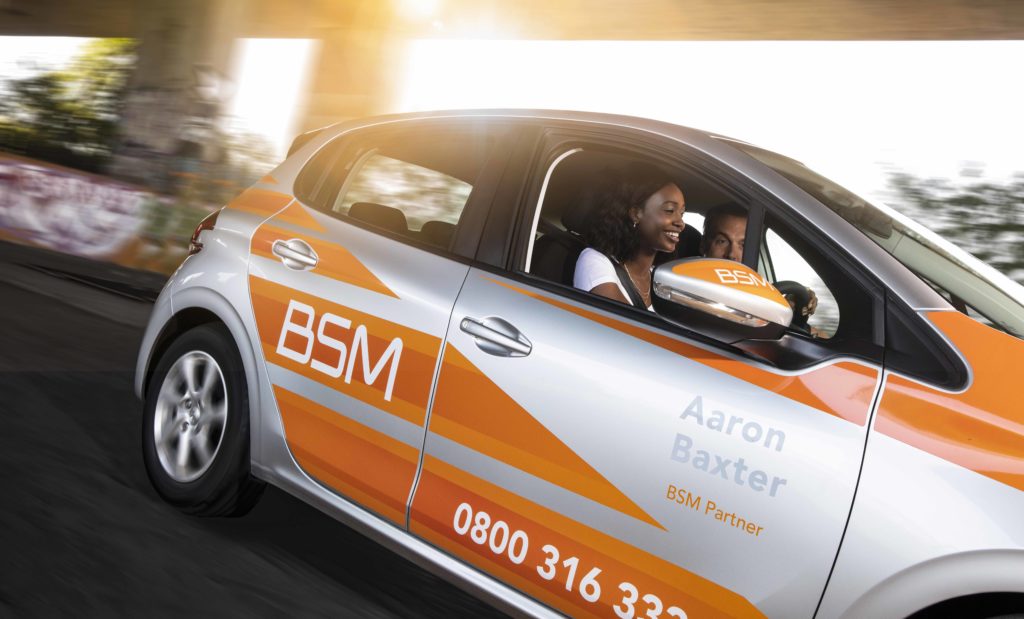
About your test car – A test car has to be reliable and meet a series of legal requirements. When you take your test with BSM, all this is taken care of. But if you decide to use your own car, you'll have to make sure it's roadworthy, with a full MOT certificate if it's over three years old – and it must be fully insured.
If your car doesn't meet the standard, the test will be cancelled and you'll lose your test fee. Find out more at www.dsa.gov.uk
Preparing for your Practical test:
Once you've passed your theory test, your instructor will tell you how ready you are for your Practical Test. Naturally, we want you to pass first time. So here are a few ways we can give you that extra edge. Your Track Record log book keeps tabs on your progress – showing you where your strengths are and what skills you'll need to brush up on.
How to pass
For a bit of extra help, BSM's Pass Your Driving Test is a really useful step-by-step guide to the Practical Test. It covers all the topics and exercises that you'll be tested on, along with tips from expert instructors and test examiners.
Make the most of your practice.
We recommend plenty of practice between lessons. Ask your instructor which manoeuvres you should run through; and remember, if you're practising with friends or family; make sure you're covered on their car insurance policy.
Take a mock Practical test
A BSM mock test shares exactly the same format as the real thing – think of it as a trial run. And to match the exam conditions even more, we'll ask a different BSM instructor to be your mock examiner.
Top 10 things to look out for
The DSA (Driving Standards Agency) regularly publish the top 10 reasons why learners fail their Practical Test. To maximise your chances of passing first time, here are some of the big things to look out for:
- Look carefully to judge when best to come out of side roads
- Use the controls correctly and demonstrate good observation when reverse parking
- Use the mirrors effectively long before you change direction or slow down
- Use the controls correctly and demonstrate good observation when reversing round a corner
- Use signals correctly, including how to cancel them and not give misleading ones
- Move away correctly from stationary positions, including good observation
- Use the correct road position, particularly on bends, and show good lane discipline on roundabouts
- Have good steering control, when making left or right turns for example
- Get in the correct position when turning right
- Don't hesitate or cause delay. Always pull out promptly at junctions.
Booking your driving test
If you're with BSM, we can book your test for you and handle all the details. Your instructor will let you know which one of our UK driving test centres is best for you. When booking check with your instructor that they're available on the day and give yourself three hours for a warm-up lesson, the test itself and the journey home. Call 0845 851 9571* or contact us online.
* Calls may be recorded and/or monitored.
When you book your test you'll need:
- Your provisional driving licence
- Your Theory test certificate number
- A debit or credit card for payment
- Your preferred dates and times for the test
- Details of any special requirements such as an interpreter
The Practical test for car drivers costs £62.00 during weekdays or £75.00 for Saturday and weekday evening tests. After about two weeks, you'll get your test appointment letter.
You can cancel your test for any reason, but you'll need to give ten working days' notice to keep your fee. The Practical test can be rearranged up to three times before it's automatically refunded. Or if you prefer, you can book your own Practical Test directly with the DSA by calling 0870 0101 372, Monday to Friday, 8am to 6pm.
Remember to make sure your instructor is available on the day, and let them know when you get your test appointment letter.
What happens on test day?
Knowing what to expect when you get to the test centre can boost your confidence and your chances of passing. Here's how the Practical test works.
Preparing for the test
Immediately before your test you should have at least an hour's lesson with your instructor to warm up and feel comfortable in the car. It'll also help to calm any last minute nerves.
Remember to bring along your test appointment letter, provisional driving licence and some other form of photographic ID. Check your appointment letter for the correct forms of ID.
What happens on test day?
First off, the examiner will ask you to sign a form and show your ID. Then they'll ask you to point out the car you'll be driving and read another car's number plate from the required minimum distance. You'll also answer one 'show me' and one 'tell me' vehicle safety question. Both answers need to be correct, or one driving fault will be recorded.
During the Practical test
The examiner will be looking to see that you're a competent and safe driver – responding to situations sensibly and making sound judgments.
Apart from general driving, such as which direction to go, where and when to turn and stop; your examiner will ask you to carry out two exercises: reversing around a corner, turning in the road or reverse parking. You could also be asked to do an emergency stop.
Your examiner wants you to do well
The examiner won't say much in case it puts you off. Put any mistakes behind you and just concentrate on what's happening in the present. One minor error doesn't mean a fail.
Despite what you might have heard – there's no quota for test passes or fails. If you've reached the required standard, you'll pass your test. It actually takes 15 driving faults or one serious or dangerous fault to fail the test.
Getting your result
As soon as your Practical Test is over, the examiner will tell you whether you've passed or failed.
If you passed, well done. You can now enjoy driving yourself around without the need to have someone else in the car. Your examiner will ask for your provisional licence, which he or she will send off to the DVLA to apply for a full licence. In the meantime, you'll get a pass certificate as well as a report that highlights any minor faults you made during the test.
If you failed, bad luck. Your examiner will spend a few moments with your instructor and you to explain why. They'll also give you a test report that highlights what went wrong. But don't get down about it – you can reapply for a test straight away and only have to wait 10 working days for a retake. Your instructor will drive you home – so use the time to quiz them about how to pass next time.